What a Heat Interface Unit Does—and Why Proactive Maintenance Saves Money
A Heat Interface Unit (HIU) is the compact, serviceable heart of a communal or district heating setup inside each flat. Instead of every home having its own boiler, the HIU transfers heat from a central plant to deliver on-demand domestic hot water and space heating. When it’s looked after correctly, an HIU offers impressive efficiency, fast hot water response, quiet operation, and lower carbon emissions. When it isn’t, bills can rise, comfort drops, and the wider heat network has to work harder than it should.
Regular HIU maintenance keeps the heat exchanger clean, the control valves responsive, and the sensors properly calibrated. In practice, that means faster hot water delivery at stable temperatures, radiators that heat evenly, and a reliably low return temperature back to the plant. Lower return temperatures are a big deal: they improve the central plant’s efficiency and reduce energy waste, which can help limit service charges for residents across the building. A well-maintained HIU also protects components like pumps and valves from excessive wear caused by sludge, scale, or incorrect pressures.
Maintenance typically covers cleaning strainers, inspecting and descaling plate heat exchangers, checking the operation of differential pressure control valves (DPCVs), setting temperature and flow parameters, bleeding and pressure-testing the secondary heating circuit, and verifying the readings from hot water sensors and heat meters. In London’s hard-water areas, scale control is essential. Even a thin layer of limescale on the domestic hot water plate heat exchanger can cause lukewarm taps, temperature swings, and higher energy use. That’s why many engineers recommend an annual service, or at least a service every 12–18 months for properties with heavy usage or known water-quality issues.
There’s also the matter of safety and compliance. Correctly set thermostatic controls help prevent scalding while still minimising legionella risk, and clear documentation supports landlords and property managers in meeting heat network and metering obligations. For mixed-tenure buildings, proactive service planning reduces disruptive breakdowns and emergency callouts, making life easier for everyone from residents to housing officers. In short, scheduled HIU maintenance keeps comfort high, risk low, and costs under control—both inside individual homes and across the wider communal system.
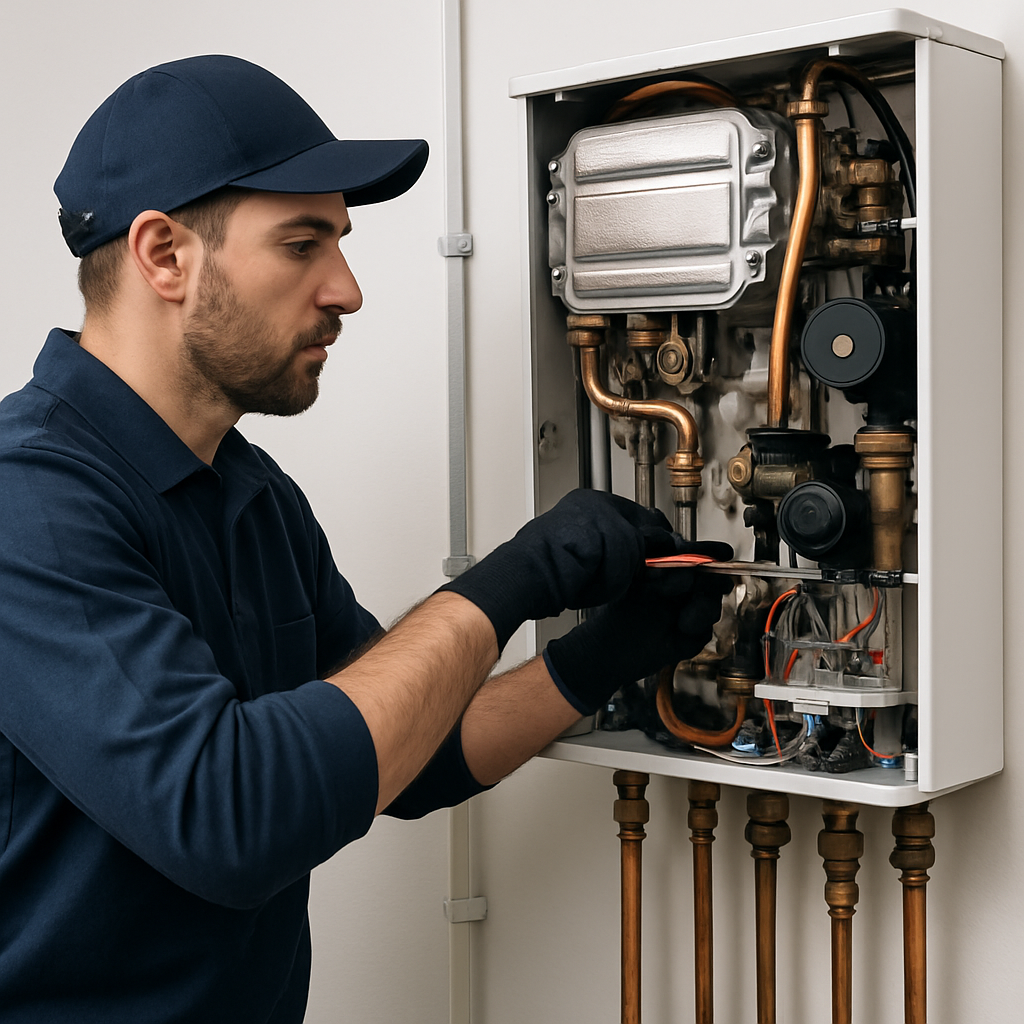
Typical HIU Faults, Warning Signs, and How Engineers Diagnose Them
HIUs are robust, but they operate continuously and handle two different sides of a heat network: primary (from the plant) and secondary (your flat’s heating and hot water). Wear, water quality, and incorrect settings can all create issues. Common symptoms include lukewarm taps, long delays before hot water arrives, radiators that never quite heat up, radiators heating when they shouldn’t, pressure loss in the secondary circuit, and banging or whistling noises from within the HIU. Persistent high return temperatures to the plant, even when flats are comfortable, is another tell-tale sign the building’s HIUs need attention.
Frequent culprits are clogged strainers, scaled domestic hot water plate heat exchangers, and valves that are either stuck or out of calibration. A differential pressure control valve set too high can cause excessive flow, noisy operation, and inefficient heat transfer. Faulty NTC sensors misread temperatures and trigger poor modulation. Secondary-side issues—such as sludge-laden radiators, air locks, or a seizing circulation pump—often show up as patchy heating or frequent low-pressure warnings. On prepayment or metered systems, a non-communicating heat meter or M-Bus fault may affect billing and data, even when heat delivery still works.
Good diagnostics start with basics: visual checks for leaks and corrosion, confirming isolation valve positions, and cleaning strainers to restore normal flow. Engineers then measure temperatures and pressures across components to assess whether the HIU is transferring heat efficiently. If the domestic hot water is unstable or slow, a plate heat exchanger descale can restore performance dramatically. Where a three-port or motorised valve fails, a replacement cartridge or actuator typically resolves the fault. For secondary heating problems, powerflushing radiators and adding magnetic filtration removes sludge that restricts flow and causes boiler-like symptoms in HIUs.
Fine-tuning matters, too. Setting correct delta-T targets, adjusting DPCVs, and ensuring hot water priority works as designed all have measurable impacts. On modern units, firmware updates and parameter checks can improve control logic. After repairs, engineers verify operation with stable flows and temperatures at taps and radiators, and many provide a service report with readings, photos, and recommendations. If a unit is repeatedly failing, the cause may be systemic: poor water quality, incorrect primary pressures, or building-side balancing issues. Addressing root causes prevents rolling breakdowns and avoids unnecessary component swaps.
Real-world example: a riverside flat with “tepid” hot water and noisy pipework was traced to a heavily scaled plate heat exchanger and an over-open DPCV. After a chemical descale, valve reset, and strainer clean, hot water temps stabilised, noise disappeared, and the plant’s return temperature dropped, improving energy efficiency for the whole block. The result? Lower complaints and fewer emergency HIU repair calls during peak winter demand. For responsive HIU maintenance and repair, London engineers experienced with all major HIU brands can quickly diagnose and resolve these issues across diverse building types.
Service Scenarios, Seasonal Tips, and London-Specific Considerations
Every building operates differently, and the right service approach reflects local conditions. Homeowners in apartment conversions often need annual HIU servicing ahead of winter to catch pressure loss, air in radiators, or descaling needs. Landlords with multiple units benefit from structured service schedules that group visits by location, minimising access disruptions and ensuring consistent settings across a portfolio. For property managers running larger estates, an asset register and a rolling maintenance plan prevent clusters of failures, help manage budgets, and support compliance with metering and billing requirements.
Water quality is a London reality—and a key reason preventive care pays for itself. Hard water accelerates limescale buildup inside plate heat exchangers, while older radiators and pipework can introduce magnetite sludge. Combining targeted HIU servicing with system-side steps—such as fitting magnetic filters, dosing corrosion inhibitors, and periodic powerflushing—extends component life and improves comfort. In practice, that means faster hot water at taps, radiators that heat evenly, and a quieter HIU cupboard free from kettle-like noises.
Seasonal checks make a noticeable difference. Before winter, verify secondary pressure, bleed radiators, and confirm that the heating zone opens and closes cleanly. In summer, a quick health check keeps domestic hot water delivery sharp and can catch early signs of scaling. Ensure thermostatic mixer settings protect against scalding while maintaining safe storage and distribution temperatures. Where prepayment or billing systems are used, periodic meter validation prevents data gaps that complicate cost recovery.
Access and communication matter. Residents appreciate clear time windows, tidy work practices, and concise service reports. For blocks with tight HIU cupboards, engineers bring compact tools and spill protection to keep finishes intact. When spare parts are needed, fast-turnaround sourcing for common brands—such as those widely installed across new-builds and retrofits—reduces downtime. Where a unit is obsolete or repeatedly failing, proactive replacement may be more cost-effective than chasing recurring faults; engineers assess heat exchanger condition, valve integrity, and overall casing health to advise on repair-versus-replace decisions.
A brief case in point: a mixed-tenure development in East London reported widespread lukewarm taps and drifting return temperatures. Coordinated servicing across 60+ HIUs—cleaning strainers, descaling domestic hot water plates, recalibrating DPCVs, and balancing secondary circuits—restored stable tap temperatures and reduced plant return temperatures by several degrees. The central plant responded with lower run hours and smoother cycling, easing operating costs for the entire network. This shows how individual flat-level HIU maintenance directly influences building-wide energy performance.
For residents, a few easy habits help: keep the HIU cupboard clear for ventilation and access; report early signs like slow hot water or frequent pressure loss; and avoid adjusting hidden valves without guidance. For landlords and managers, fixed-price servicing and transparent repair quotes keep expenditure predictable. Partnering with experienced London-based engineers who handle all major HIU brands ensures quick diagnostics, practical advice, and reliable results—vital in a city where communal heating supports thousands of homes, from warehouse conversions to high-rise towers along the Thames.

Born in Sapporo and now based in Seattle, Naoko is a former aerospace software tester who pivoted to full-time writing after hiking all 100 famous Japanese mountains. She dissects everything from Kubernetes best practices to minimalist bento design, always sprinkling in a dash of haiku-level clarity. When offline, you’ll find her perfecting latte art or training for her next ultramarathon.