A well-chosen pressure washer can transform grimy equipment, stained concrete, and salt-crusted fleets into assets that look better, last longer, and perform safely. Yet cleaning power is only part of the story. For municipalities, contractors, and industrial operators, the smartest approach blends high-performance washing with responsible water capture and treatment. That mix keeps operations aligned with stormwater rules, reins in maintenance costs, and protects brand reputation. Understanding how machines, chemistry, temperature, and containment all work together is the key to building a wash setup that’s both powerful and compliant.
How a Pressure Washer Really Works—and Why PSI Isn’t Everything
Most people fixate on PSI, but the real cleaning equation balances pressure with flow, heat, chemistry, and technique. Pressure lifts grime; flow (GPM) carries it away. For heavy soils like clay, sand, and salt, higher flow often matters more than raw PSI because rinsing volume removes the load. Think of a 4–6 GPM unit with moderate pressure as a fast “rinsing machine,” while ultra-high PSI tools target tough, bonded films or etching tasks that need precise nozzles and controlled passes.
Heat is a silent force multiplier. A hot-water machine—often 180°F or more—reduces surface tension, softens grease, and accelerates detergents. If you face oils, hydraulic fluid, or winter brine residues, a heated system cuts dwell time and chemical usage while improving final rinse quality. Combine this with the cleaning fundamentals often summarized as time, agitation, chemical, and temperature. Giving detergents a few minutes to dwell, scrubbing with a brush or surface cleaner, choosing the right pH, and adding heat deliver results a cold-water blast can’t match.
Nozzle choice also shapes outcomes. A 25° or 40° fan is your everyday workhorse for vehicles and equipment, providing coverage without gouging paint or decals. Turbo/rotary nozzles offer aggressive impact for concrete and steel, but require strong operator control. Surface cleaners create even stripes-free results on pads and sidewalks while containing splash. At the machine, the unloader valve and bypass routing protect the pump; never “deadhead” for long, and avoid running dry to prevent cavitation. Quality inlet filtration and properly sized hoses reduce pressure drop and protect seals and valves.
Chemistry completes the picture. Degreasers emulsify oils; alkaline detergents lift soils; acid-based cleaners remove scale and oxidation from metals and brick. Choose biodegradable, equipment-safe chemistries and rinse thoroughly. For fleets, a two-step process—acid brighten followed by alkaline foam—can break traffic film efficiently when used per label directions. Finally, water quality matters. Hard water can reduce detergent efficiency and scale coils; softening or descaling maintenance preserves burner performance and keeps downstream components healthy.
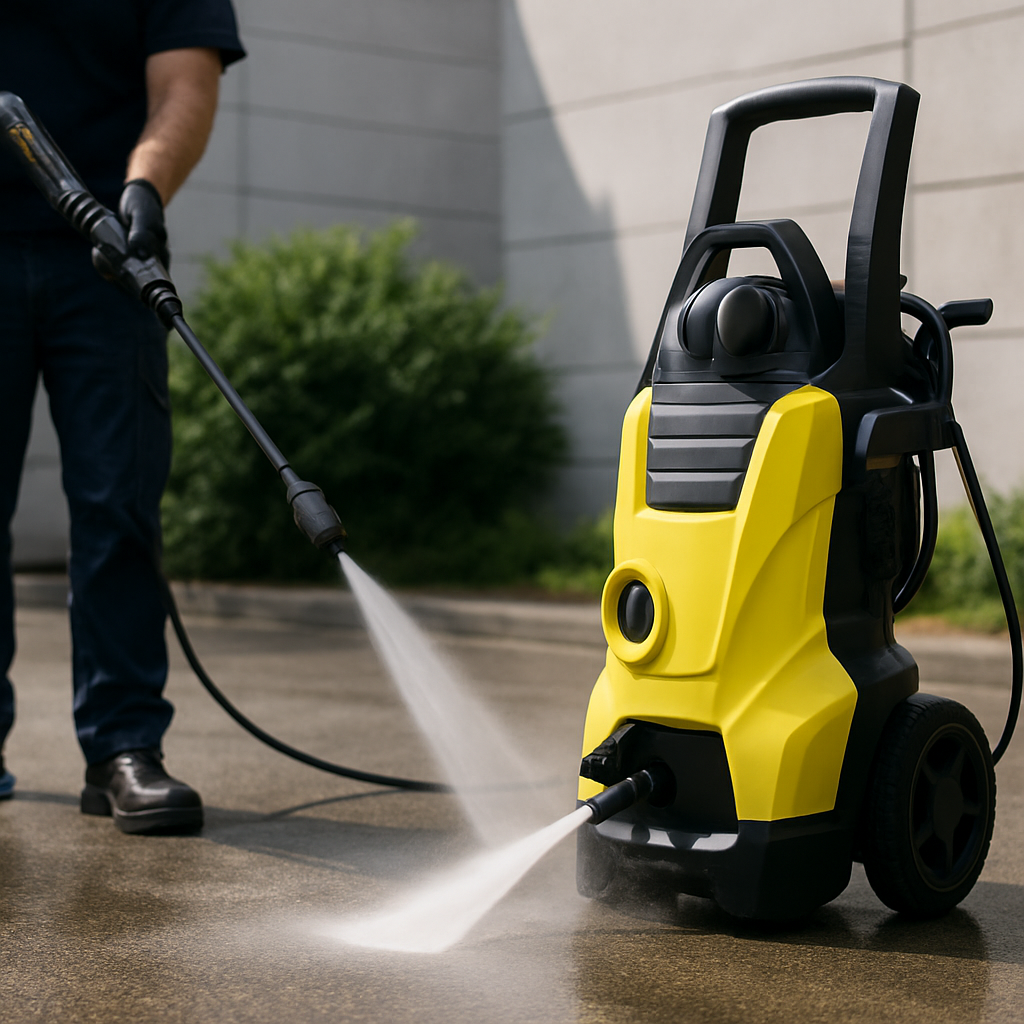
Clean Water Regulations and the Hidden Cost of Dirty Runoff
Where does the dirty water go? That question separates a great cleaning job from an environmental liability. Wash water laden with detergents, oils, heavy metals, and sediment can’t be allowed to run to the storm drain in most jurisdictions. Under the umbrella of the Clean Water Act and local NPDES-related requirements, discharge rules are strict: storm systems lead to natural waterways, not treatment plants. Sending wash water there risks fines, claims, and shutdowns—not to mention damage to community trust.
The responsible approach integrates containment, treatment, and, where appropriate, recycling. A grated wash pad or rack channels flow to a sump. Berms or portable containment mats keep water captured during mobile jobs. Solids separation removes sand and sludge early to protect downstream equipment. An oil-water separator pulls out free oils before filters polish the water, and optional pH adjustment or carbon media can address site-specific needs like metals or hydrocarbons. In many fleet yards, a closed-loop reclaim system returns treated water to the wash, cutting consumption and sewer fees while keeping discharges under control.
Consider common scenarios. Refuse trucks drip leachate and oils; construction equipment sheds clay and diesel sheen; snow fleets carry corrosive brines; street sweepers arrive caked in fines. Fast blasting without capture spreads contamination. Smart programs begin with source control: dry scraping heavy mud, pre-treating greasy spots with the right detergent, and segregating hazardous residues. Then, use vacuum recovery or trench drains to collect the wash water, manage sludge responsibly, and document maintenance. Even mobile contractors can work clean by deploying portable berms, vacuum squeegees, and temporary tanks for off-site disposal.
Compliance is not just about avoiding penalties—it’s risk management. Insurers favor documented BMPs, municipalities protect their infrastructure, and private operators reduce premature corrosion and maintenance caused by salt and chemicals. Choosing a professional-grade pressure washer is only half the equation; pairing it with the right containment pads, separators, and reclaim technology completes a resilient, future-proof system that benefits operations and the environment.
Selecting and Operating the Right System for Your Site
Picking the ideal setup starts with workload, location, and fuel. Gas and diesel units suit outdoor, high-demand tasks; electric units excel indoors where emissions and noise matter. For fleets and heavy equipment, hot-water systems are often worth the investment—grease and winter brine rarely yield to cold water alone. Match flow and pressure to soils: 4–8 GPM at 2,000–3,500 PSI covers most vehicle and equipment jobs, balancing speed and safety. Remember that “cleaning units” (PSI × GPM) can be a rough reference, but for real-world productivity, higher GPM is a significant driver.
Decide between portable carts, skid mounts, or stationary equipment. Portable systems pair well with mobile contractors and municipal field work, especially when backed by a vacuum recovery tool and containment mats. Skid units with onboard tanks and burners transform service trucks into turnkey wash rigs. Stationary machines beside grated pads create safe, repeatable wash bays with hose reels, wands, and surface cleaners at the ready. Accessories make a difference: quick-connect nozzles for various tasks, downstream injectors for delicate chem dosing, and telescoping wands to reduce ladder use on tall assets.
Site design is where durability and compliance meet. A sloped pad or trench directs water; screens and sumps capture solids; an oil-water separator and filtration train treat flows; and a reclaim loop slashes consumption. Add freeze protection if you operate in cold climates—insulated enclosures, heat tracing on lines, and glycol for winterizing machines prevent mid-season breakdowns. Indoors, ensure burner ventilation and carbon monoxide safety, and consider water softening to prevent scale inside heating coils that erodes efficiency and spikes fuel costs.
Real-world results reinforce the value. A Midwestern public works yard reconfigured a cracked concrete slab into a grated pad feeding solids traps, an oil-water separator, and a closed-loop reclaim system. Hot-water washing at 5.5 GPM now removes salt and grime quickly, water use dropped by more than half, and discharges to storm drains ceased. A paving contractor, meanwhile, equipped crews with portable berms and vacuum recovery; slurry and fines are collected on-site and disposed of properly, protecting nearby inlets. In both cases, the blend of a capable pressure washer with containment and treatment preserved assets, reduced risk, and improved daily productivity for crews who need fast, repeatable results.

Born in Sapporo and now based in Seattle, Naoko is a former aerospace software tester who pivoted to full-time writing after hiking all 100 famous Japanese mountains. She dissects everything from Kubernetes best practices to minimalist bento design, always sprinkling in a dash of haiku-level clarity. When offline, you’ll find her perfecting latte art or training for her next ultramarathon.