In a market shaped by regulatory scrutiny, complex ownership structures, and evolving risk, asset management in Ireland is about more than inventories and spreadsheets. It blends operational discipline, legal awareness, and on-the-ground execution to keep property, equipment, vehicles, deeds, and sensitive records under clear control. From banks and state bodies to corporates, SMEs, receivers, and legal advisers, organisations seek a partner-led approach that safeguards value, accelerates decisions, and supports responsible outcomes. For an overview of practical solutions, explore Asset Management Ireland.
Understanding Asset Management in Ireland: Visibility, Documentation, and Practical Control
Effective asset management in Ireland starts with visibility. Organisations need precise knowledge of what they own or control, where assets sit, who is responsible, and how each item aligns with financial, legal, and operational objectives. A robust asset register is the backbone of this effort—capturing identifiers, locations, condition, valuation, security status, and chain-of-custody notes. For high-risk or regulated environments, that register must be continuously validated through site visits, audits, and reconciliations that stand up to internal oversight and external review.
Documentation is equally central. Title and deed records, charge registrations, warranties, service histories, and inspection logs must be organised and defensible. In practice, that calls for disciplined document management, including version control, scheduled updates, and secure retention policies that meet Irish legal and data-protection standards. Where multiple stakeholders are involved—lenders, borrowers, receivers, legal teams—coordinated information flow ensures clarity on rights, obligations, and timelines, reducing the risk of missteps and delays.
On the ground, control is achieved through defined procedures and trained personnel. For example, securing vacant property may require risk assessment, access protocols, alarm or CCTV oversight, and documented patrols. Managing mobile assets such as vehicles or plant might involve GPS tracking, utilisation monitoring, and standardised recovery or redeployment steps. Reputable operators in Ireland are often licensed by the Private Security Authority when security duties are involved, reflecting a commitment to lawful, ethical practice in complex scenarios. These operational layers are not add-ons; they are how organisations convert policy into action and turn compliance into measurable results.
Finally, reporting stitches everything together. Dashboards and structured updates translate field activity into executive insight: what changed, what was escalated, what risks are rising, and what value is being protected. This blend of data and narrative context allows leaders to act decisively—bringing asset visibility, risk reduction, and accountability into daily management rather than treating them as end-of-year chores.
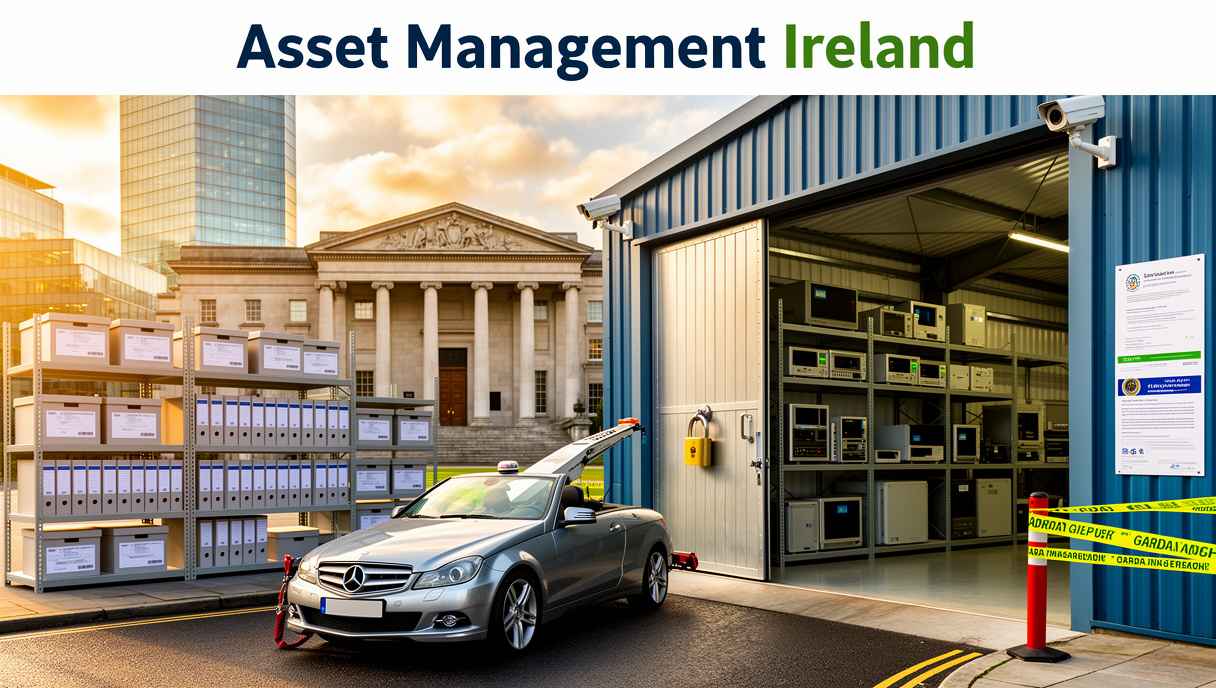
From Recovery to Oversight: Real-World Scenarios Faced by Irish Organisations
Irish organisations encounter a spectrum of asset scenarios that test both planning and execution. In distressed or disputed situations, pre-enforcement assessments are essential: mapping legal instruments, clarifying security interests, verifying occupancy or possession, and identifying practical access constraints. A calm, phased plan—communications, voluntary engagement, documentation checks, and risk controls—can resolve many cases without escalation. Where enforcement proceeds, precise coordination with legal teams, receivers, and licensed operators helps ensure proportional, compliant actions and clear records of each step taken.
Consider a property portfolio requiring stabilisation before sale or handover. Vacant sites may need security upgrades, safety surveys, and environmental checks, while occupied premises might require respectful engagement, documentation of condition, and structured move-out or transition plans. Each step demands auditable process: photographs, logs, inventory of fixtures, meter readings, and transfer notes. That disciplined approach preserves value, reduces disputes, and accelerates decisions—turning a potentially adversarial process into an organised pathway to resolution.
Corporate and public-sector environments face different pressures. A nationwide fleet upgrade, for instance, may involve decommissioning older vehicles, capturing keys and paperwork, reconciling finance or lease status, and redeploying assets for interim use. Similarly, laboratory or IT equipment often carries data-protection or health-and-safety implications; here, chain-of-custody protocols, secure data wipes, calibrated disposal routes, and vendor oversight are crucial. In every case, asset recovery is not only about retrieval—it is about preserving evidence, safeguarding privacy, and documenting compliance so decisions are defensible under scrutiny.
Speed matters, but so does proportionality. An approach grounded in Irish best practice emphasises respectful engagement, meticulous records, and transparent reporting to stakeholders. When organisations manage this balance, they reduce reputational risk, contain costs, and avoid long-tail liabilities. The most successful programs in Asset Management Ireland combine specialist know-how with local awareness—recognising regional dynamics, coordinating with relevant partners, and employing trained teams who can adapt to site-specific challenges while keeping the end goal firmly in view.
Governance, Risk, and Reporting: Building a Resilient Asset Programme in Ireland
Strong asset programmes are built on governance. That begins with policies that define what “good” looks like: clear acceptance criteria for new assets, lifecycle rules for maintenance and disposal, approvals for write-offs, and segregation of duties for inventories and valuations. A practical governance framework also sets thresholds for escalation, outlines the evidence required for each decision, and specifies how exceptions are handled. Coupled with risk assessments, it allows organisations to prioritise high-impact assets and sites, allocate resources intelligently, and anticipate challenges before they harden into losses.
Operationally, standard operating procedures translate policy into action. They cover site access, key control, conflict de-escalation, secure storage, deed and record handling, and incident response. Where security is involved, working with PSA-licensed providers ensures alignment with Irish legal requirements and recognised conduct standards. Technology amplifies these controls: mobile apps for chain-of-custody, photographic time-stamps, geo-tagging for site visits, and dashboards that consolidate status across counties and portfolios. Yet technology only works if people use it consistently, so training, supervision, and periodic audits remain central to sustained performance.
Reporting is where governance earns trust. Executives and boards need concise, relevant metrics: percentage of assets reconciled, time-to-stabilise properties, variance between book and physical counts, recovery rates post-enforcement, and cost-to-serve by asset class. Narrative context matters too—why a variance occurred, what remediation is underway, and which risks are trending. Well-structured reports enable faster, safer decisions: when to divest, reinvest, repurpose, or escalate legally. They also feed regulatory interactions, internal audits, and insurer discussions, demonstrating that compliance is active and defensible.
Finally, resilience means preparing for change. Mergers, restructures, new regulations, or sector shocks can ripple across inventories, titles, and contracts. A mature programme in Ireland builds playbooks for surge events—rapid mobilisation for portfolio reviews, pre-agreed protocols for sensitive sites, and communication plans that protect stakeholders while moving projects forward. By combining governance, measured risk taking, and field-ready execution, organisations transform asset management from a reactive cost centre into a proactive capability that protects value, improves oversight, and delivers smoother outcomes in challenging commercial environments nationwide.

Born in Sapporo and now based in Seattle, Naoko is a former aerospace software tester who pivoted to full-time writing after hiking all 100 famous Japanese mountains. She dissects everything from Kubernetes best practices to minimalist bento design, always sprinkling in a dash of haiku-level clarity. When offline, you’ll find her perfecting latte art or training for her next ultramarathon.