The landscape of preclinical investigation continues to evolve, and one compound that has secured a central role in muscle-wasting and bone-density research is MK-2866, widely known as Ostarine. For Australian laboratories, university departments, and independent contract research organisations, obtaining this selective androgen receptor modulator in a form that guarantees repeatable outcomes has become a priority. Yet the process is not as simple as adding an item to a cart. Researchers must navigate questions of purity verification, domestic stock location, appropriate presentation formats, and compliance with local regulatory expectations. This article maps out the critical factors that define a trustworthy supply channel, helping you understand what to look for before you source research-grade Ostarine on Australian soil.
Understanding MK-2866: What Makes Ostarine a Staple in Laboratory Research
MK-2866 belongs to a class of molecules called selective androgen receptor modulators, or SARMs. Unlike traditional androgenic compounds, Ostarine was developed to exhibit pronounced tissue selectivity, binding with high affinity to androgen receptors in skeletal muscle and bone while demonstrating limited activity in secondary reproductive tissues. In in-vitro and rodent models, this characteristic has allowed researchers to dissect anabolic pathways without the confounding variables introduced by broader-acting agents. Preclinical studies have explored its potential influence on lean mass preservation during caloric restriction, recovery from disuse atrophy, and bone mineral density maintenance, all of which make Ostarine a versatile tool in metabolic and musculoskeletal research.
However, the value of Ostarine in a laboratory setting hinges entirely on the quality of the material being used. A research compound contaminated with synthesis by-products, residual solvents, or incorrect isomers can produce data that is, at best, misleading and, at worst, irreproducible. When designing experiments that rely on accurate dose-response curves, even a small deviation in purity can shift EC50 values or mask subtle mechanistic insights. This is why researchers working with MK-2866 must insist on a supply chain that treats the compound not as a generic product but as a precision research tool. The starting point for any investigation is the confidence that the vial or capsule contains exactly what the label claims, at a verified purity level suitable for publication-quality work.
Beyond purity, the physical form of Ostarine matters. The compound is commonly handled as a crystalline powder in its raw state, but for many laboratory protocols it is dissolved into a liquid solution using a solvent such as polyethylene glycol or dimethyl sulfoxide, or precisely weighed into capsules for oral gavage studies. Each format introduces its own set of handling and storage considerations. A liquid Ostarine solution enables fine volumetric dosing adjustments, which can be crucial when titrating low concentrations in cell culture media or small-animal models. Conversely, pre-measured capsules reduce the risk of airborne powder contamination and simplify inventory tracking in high-throughput facilities. In every case, the researcher’s ability to control the independent variable starts with a reliable, analytically verified supply.
Quality Assurance and Purity: The Non-Negotiables When You Buy Ostarine in Australia
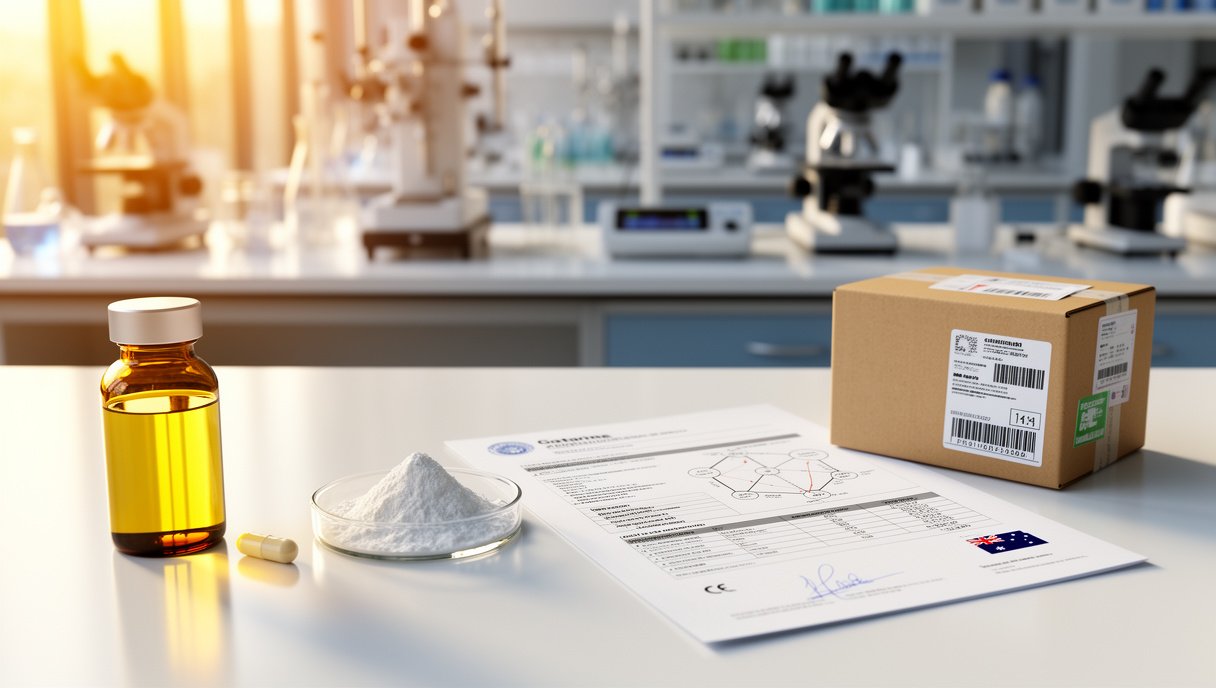
No amount of careful pipetting or sophisticated imaging can compensate for a starting material of unknown integrity. That is why the bedrock of any reputable Ostarine supply is third-party testing. When a laboratory commits to purchasing MK-2866, it should expect to see a Certificate of Analysis (COA) from an independent, accredited facility. This document typically reports results from high-performance liquid chromatography (HPLC) or mass spectrometry, detailing the exact percentage purity of the batch, along with any detected impurities. A legitimate COA will include the batch or lot number that matches the product label, a test date, and a clear chromatogram trace. Researchers who Buy Ostarine Australia from a supplier that transparently publishes such documents are effectively peer-reviewing their own supply chain before the first experiment begins.
Purity verification has downstream effects that ripple through every facet of a research program. First, high-purity Ostarine research materials reduce the risk of off-target effects that could be mistakenly attributed to the compound itself. Second, they allow precise calculation of molar concentrations, which is indispensable when correlating receptor binding data with functional readouts. Third, in longitudinal studies where compound potency must remain stable over weeks or months, a verified starting purity creates a reliable baseline against which any degradation can be measured. Without this baseline, interpreting shifts in biological response becomes a guessing game. Researchers in Australia are increasingly gravitating toward vendors that make third-party COAs a central feature of their offering, recognising that analytical transparency is not a marketing extra—it is a scientific necessity.
Equally important is the physical stability of the product during transit and storage. Ostarine, like many fine organic powders, can be sensitive to humidity and temperature extremes. A domestic supply line eliminates the long, uncontrolled journeys that can expose research compounds to condensation, thermal cycling, and handling damage. When a researcher in Brisbane, Melbourne, or Perth orders from an Australian-based stock, the product moves through a much shorter logistics chain, often with climate-aware packaging. The result is a compound that arrives in the same condition it was in when it left the testing laboratory, preserving the very purity the COA describes. For liquid solutions, local dispatch also minimises the risk of solvent evaporation or seal failure that can occur during extended international freight.
Navigating the Australian Market: Domestic Supply, Shipping, and Practical Considerations for Researchers
For many Australian laboratories, the decision to source Ostarine locally is driven by more than just shipping speed. Customs clearance for research chemicals can be unpredictable, and even a correctly declared shipment of MK-2866 intended for in-vitro use may face delays if border authorities require clarification. By choosing a supplier that maintains domestic inventory, researchers effectively bypass this uncertainty. The parcel originates inside Australia, travels within Australia, and arrives without needing to satisfy international import requirements. This not only shortens delivery windows—often to a matter of days with tracked domestic couriers—but also brings the supply chain into alignment with the researcher’s obligation to handle materials responsibly.
Australian research institutions often have strict procurement policies that demand clarity around product provenance. A vendor that offers discreet packaging, professional labelling, and a straightforward secure checkout process meets the operational standards that university compliance officers expect. Discreet packaging is not about secrecy; it is about protecting the integrity of temperature-sensitive contents and preventing unnecessary curiosity during transport. Secure payment gateways and clear data-handling practices further reassure procurement teams that the transaction meets modern digital security norms. These practical details may seem mundane, but they collectively enable a smooth, repeatable procurement process that keeps the research timeline on track.
Format flexibility is another practical dimension that shapes the buying decision. Australian researchers may need Ostarine powder for custom formulation work, such as creating bespoke nanoparticle carriers or combining the compound with other agents in a study design. Others prefer liquid Ostarine that is already dissolved and ready for sterile filtration before cell culture application. Pre-filled capsules offer a turnkey solution for studies that use oral administration in animal models, where exact milligramme dosing must be consistent across dozens of subjects. A supplier that carries all three forms under one roof simplifies inventory management and ensures the researcher can pivot between experimental designs without having to revalidate a new vendor’s quality claims. The added availability of detailed product specifications, FAQs, and research-oriented blog content further aids in method development, giving researchers faster access to solubility data, recommended storage conditions, and handling precautions.
Finally, the regulatory context in Australia continues to treat MK-2866 as an unapproved research substance, meaning it is lawful to possess and handle it strictly for laboratory and analytical purposes. No claims of human use or therapeutic benefit are permissible, and products are sold exclusively as research materials. This positions the procurement process firmly within the realm of scientific due diligence. Researchers who need Ostarine for in-vitro binding assays, cell differentiation studies, or preclinical animal modelling can proceed with confidence when they select a supply partner that reinforces the research-only designation at every touchpoint—from the website disclaimers to the labelling on the package itself.

Born in Sapporo and now based in Seattle, Naoko is a former aerospace software tester who pivoted to full-time writing after hiking all 100 famous Japanese mountains. She dissects everything from Kubernetes best practices to minimalist bento design, always sprinkling in a dash of haiku-level clarity. When offline, you’ll find her perfecting latte art or training for her next ultramarathon.