A well-designed truck unloading conveyor turns the most unpredictable part of material flow—manual unloading at the dock—into a smooth, repeatable, and data-driven process. From ecommerce peaks and parcel surges to industrial imports and cross-border shipments, facilities that embrace mechanized unloading accelerate dock-to-stock time, reduce labor strain, and consistently hit service-level targets. Whether the operation handles cartons, totes, parcels, sacks, or mixed freight, the right conveyor system connects the truck interior to sortation, palletizing, or storage with minimal touches, fewer safety risks, and measurable gains in throughput. As logistics networks scale and same-day promises tighten, the unloading zone no longer has to be a bottleneck—it can be a strategic advantage.
How a Truck Unloading Conveyor Works—and Why It Matters
At its core, a truck unloading conveyor bridges the gap between the trailer floor and your in-plant material flow. The system typically starts with an extendable or telescopic section that reaches deep into the trailer, allowing operators to bring the conveyor face directly to the freight. From there, cartons or parcels travel along belts or rollers to fixed or mobile takeaway lines leading to sortation, pallet build stations, or putwalls. Advanced designs include an articulating nose for optimal contact with the trailer bed, adjustable heights to suit different vehicle types, and variable-speed drives for precise control during peak or fragile-item handling.
In fast-moving parcel environments, extending booms with powered belts are common, while in lower-intensity or mixed-case scenarios, gravity or powered flexible conveyors offer an economical solution. Add-ons such as LED task lighting, onboard fans, and operator platforms improve ergonomics and visibility inside trailers. Safety is engineered in: photo-eye accumulation, soft starts, emergency stops, anti-collision sensors, and guarded pinch points sharply reduce incident risk. Integration with a WMS, WCS, or PLC enables scan-verify steps, carton identification, and routing—so items not only move faster but also move smarter.
The business case is compelling. By replacing repetitive lifting and long walk distances, a truck unloading conveyor cuts unload time per trailer, reduces fatigue-driven errors, and helps retain staff in a tight labor market. Operations in express delivery, third-party logistics, and cross-border e-commerce particularly benefit as they manage frequent door turns and varied vehicle types. For facilities upgrading from purely manual unloading, a phased deployment—starting with one dock and expanding to a bank of docks—delivers immediate savings and supports future automation. To explore available configurations and specifications, consider reviewing a dedicated product lineup for a truck unloading conveyor that fits specific freight and throughput needs.
Selecting the Right Conveyor: Telescopic, Flexible, or Hybrid?
Choosing the optimal solution starts with freight mix and volume. Telescopic belt conveyors shine in high-throughput parcel and carton environments, where speed, gentle handling, and deep reach are essential. Multi-stage booms (e.g., two to five sections) service 40–60 ft trailers, while variable-speed controls let operators modulate flow. Optional articulating or “gravity assist” noses minimize gaps and protect cartons as the boom extends and retracts. These systems often include interlocked lighting and fan kits, corded or wireless pendants, and reversible belts for rapid trailer clearance.
Powered flexible roller conveyors offer unmatched agility for facilities with variable dock positions, irregular trailer loading patterns, or mixed SKUs. They snake around columns, expand or contract based on floor space, and can connect directly to fixed lines. When budget or duty cycle dictates, flexible gravity skatewheel conveyors provide a cost-friendly alternative. They rely on slope and manual guidance, making them ideal for lighter loads or intermittent truck visits. For bulkier or non-conveyable items, hybrid setups pair a telescopic belt with side tables, lift assists, or vacuum lifters, ensuring safe handling while maintaining flow.
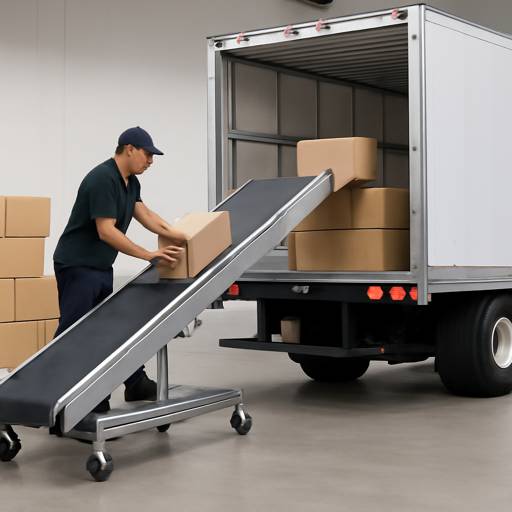
Look beyond mechanics to environmental and operational parameters. Temperature swings, humidity, and dust affect belt materials, bearings, and drives—specify components and IP ratings accordingly. Consider door spacing, ceiling height, floor flatness, and turning radius for mobile units. Controls matter: photo-eye accumulation and zone control reduce pressure on fragile parcels; zero-pressure accumulation logic with VFDs smooths flow to downstream chokepoints. Safety features—interlocked gates, E-stops, and audible beacons—improve operator confidence. Serviceability completes the picture: easy-access panels, standardized spare parts, and local technician availability keep uptime high.
Finally, weigh total cost of ownership rather than price alone. A premium telescopic system that eliminates two labor positions per shift and unloads each trailer 15 minutes faster can out-earn a cheaper alternative within months. Factor energy efficiency, warranty coverage, the ease of operator training, and the path to future automation (e.g., inline dimensioning, weighing, and scanning). Align the specification with growth forecasts—modular systems that scale from a single dock to a multi-door bank preserve capital and reduce changeover disruptions.
Implementation Playbook: Layouts, Safety, and ROI You Can Defend
Implementation begins with a dock study. Map peak-hour arrivals, trailer types, and the mix of cartons, totes, and irregulars. Document walk paths, lift counts, and choke points from the trailer to the first accumulation zone. Next, design a flow line that minimizes manual touches: telescopic boom into powered flexible conveyor, into a fixed takeaway, and onward to sortation or pallet build. Provide space for load leveling at the trailer entrance, clear sightlines for the operator, and sufficient clearance for a second dock line during peaks. Where feasible, mirror the layout across adjacent doors to simplify training and spare-parts strategy.
Build a robust safety and training layer. Conduct pre-go-live hazard assessments, test E-stop reachability, confirm guarding on lift points, and define speed limits near pedestrian crosswalks. Establish lockout/tagout procedures, daily inspection checklists, and “first five minutes” startup routines for operators. Digital signage and floor markings reinforce traffic discipline, and blue light or audible alerts improve awareness in noisy dock environments. To reduce cumulative strain, combine the conveyor with height-adjustable platforms and handheld scan devices that limit twisting and overreach.
Quantifying ROI is straightforward when the right metrics are captured. Begin with baseline unload time per trailer, operators per door, and lost-time incidents. After installation, measure door turns per shift, carton-per-labor-hour, and damage rates. Many facilities see 25–50% faster unloads and reclaim one to two full-time equivalents per door, per shift. Consider a typical ecommerce hub running 30 inbound trailers daily: if a truck unloading conveyor trims 12 minutes per trailer, that’s six saved labor hours every day at one door—multiplied across doors and shifts, payback often lands within 6–18 months. Add intangible gains like improved retention and fewer overtime spikes during seasonal peaks.
Sustained performance requires smart maintenance. Schedule periodic belt tracking checks, roller cleanings, and sensor calibrations. Leverage predictive indicators from VFDs and PLCs—motor current trends, stop/start counts, and alarm histories—to time interventions before failures occur. Stock critical spares (belts, photo-eyes, drive units) and train dock leads to troubleshoot basic faults. When operations expand—additional doors, cross-dock annexes, or new product lines—modular extensions and standardized controls let teams replicate success quickly. The outcome is a safer, faster, and more resilient unloading zone ready for next-day expectations and cross-border surge volumes.

Born in Sapporo and now based in Seattle, Naoko is a former aerospace software tester who pivoted to full-time writing after hiking all 100 famous Japanese mountains. She dissects everything from Kubernetes best practices to minimalist bento design, always sprinkling in a dash of haiku-level clarity. When offline, you’ll find her perfecting latte art or training for her next ultramarathon.